Introduction
Mid‑Century Modern (MCM) aesthetics continue to influence hospitality and commercial interiors, driven by clean lines, warm materials and sculptural fixtures. For architects and hotel designers, leveraging this revival is not just a matter of selecting a visually authentic fixture; it requires detailed procurement strategies to reconcile vintage aesthetics with modern performance, regulatory compliance and construction schedules. This article examines the practical concerns — quality assurance, lead time management, certification and technical specification — and provides actionable guidance for successful MCM lighting procurement at scale.
Key Industry Insight
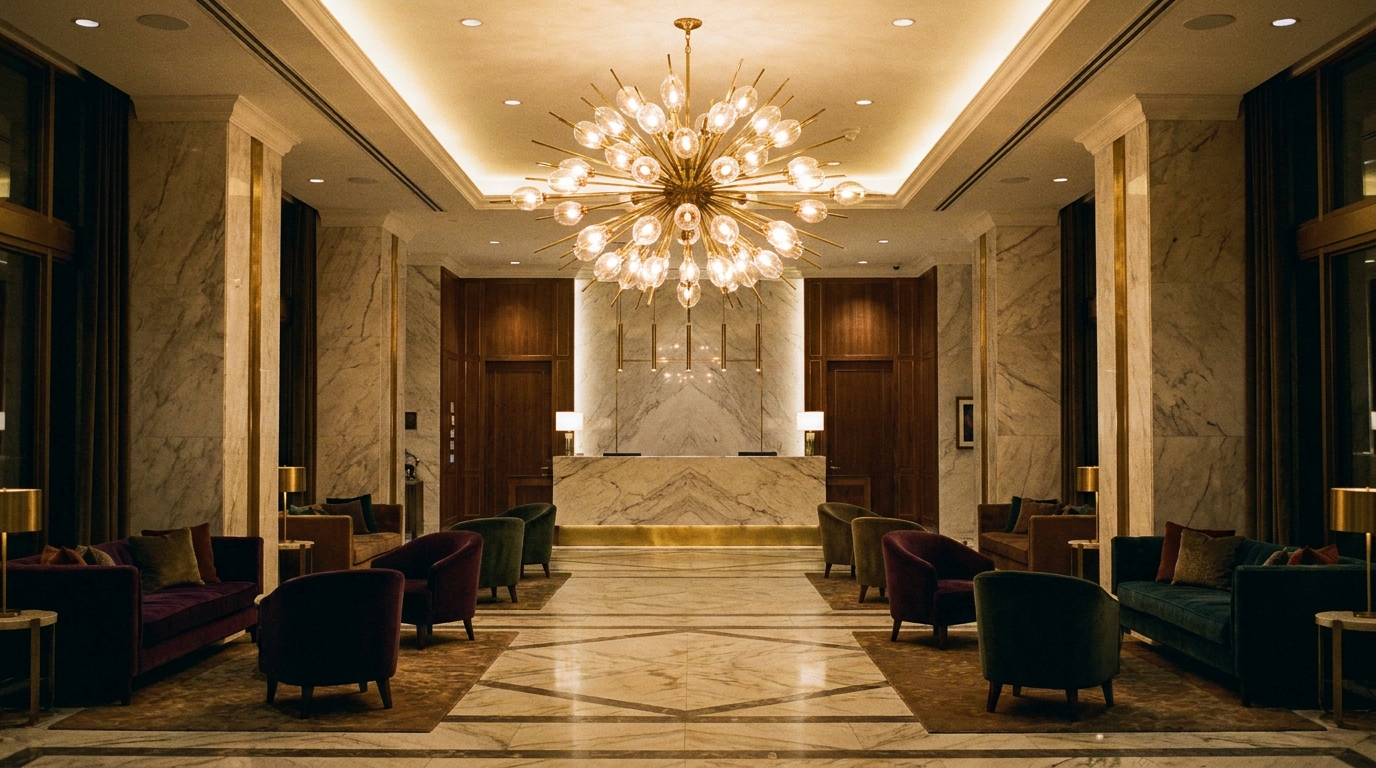
The MCM revival places a premium on material authenticity: brass finishes, opaline glass, walnut accents and signature silhouettes such as sputnik chandeliers, cone pendants and tripod floor lamps. However, contemporary projects demand LED efficiency, consistent color performance, dimming compatibility and robust warranties. The central industry challenge is delivering the look and tactile quality of original mid‑century pieces while meeting lifecycle, maintenance and compliance expectations of modern hospitality operations.
Common B2B pain points:
- Quality mismatch between showroom samples and production units.
- Long and variable lead times for custom finishes and bespoke fixtures.
- Certification gaps (UL/CE/ENEC/UKCA) for global deployments.
- Integration issues: dimming protocols, emergency lighting, driver access.
- Lifecycle costs: replaceability of modules, finish durability in high‑touch environments.
Procurement strategy: Balance authenticity and performance
- Early design‑to‑procurement alignment: engage lighting manufacturers during schematic design to define constraints on size, mounting and maintenance access. Avoid late-stage design changes that disrupt long lead items (e.g., custom blown glass).
- Specify both aesthetic and performance attributes: list finish standards (PVD, brushed brass, lacquer), measured light output (lumens at 3000K), color criteria (CRI ≥ 90, 2-step MacAdam preferred in guest‑facing areas), and mounting tolerances.
- Prioritize modularity: prefer fixtures with replaceable LED modules and drivers accessible without disassembling decorative elements.
- Risk mitigation: specify sample approvals (PPS) and pre‑production samples, plus third‑party inspection on shipment (SGS/TÜV).
Typical lead‑time expectations (for planning)
- Off‑the‑shelf standard finishes: 4–8 weeks
- Configured fixtures (standard models with non‑standard finishes or optics): 8–12 weeks
- Fully bespoke fixtures (custom glass, complex metalwork, exclusive finishes): 12–20+ weeks Allow additional time for international shipping, customs and on‑site mockups. Factor in contingency for finish revisions after mockups.
Cost and MOQ considerations
- Small projects: prioritize stocked or configurable items to avoid MOQ penalties.
- Large or flagship hotels: negotiate tooling and NRE (non‑recurring engineering) amortized across the project to control per‑unit cost.
- Total cost of ownership: specify driver lifetime, expected lumen maintenance (L70/L90), and access for maintenance to assess true lifecycle cost versus initial fixture price.
Technical Detail
Technical specifications convert design intent into measurable procurement requirements. Below are critical technical items to include in a commercial MCM lighting spec.
Photometric and color performance
- CCT recommendations: 2700K–3000K for guest rooms and public areas to preserve warm mid‑century character. Use 3000K in higher‑task back‑of‑house areas where warmer tones may hinder performance.
- CRI/RA: Minimum CRI 90 for guest‑facing fixtures to ensure accurate skin tones and material rendering.
- Binning and consistency: specify ANSI lumen and color binning requirements (e.g., 3 SDCM max) to avoid batch‑to‑batch variation.
- Lumen maintenance: request LM80 data and TM‑21 projections; specify L70 ≥ 50,000 hours for typical applications.
Electrical, controls and compatibility
- Dimming protocols: define required compatibility (DALI-2, 0–10V, forward phase/ELV) and ensure driver manufacturers provide full dim curves. For hospitality, DALI-2 offers best integration with building control systems and individual room control.
- Surge and transient protection: specify surge rating and driver protection where building power quality is uncertain.
- Emergency and egress integration: define whether fixtures require maintained or non‑maintained emergency modules; ensure integration with central battery systems as required by local code.
Mechanical, finish and durability
- Finish durability: specify testing for salt spray (for coastal sites), UV resistance and hardness (pencil hardness or ASTM standards) for painted or plated finishes.
- Materials: for authenticity, brass and bronze are preferred — specify base metal thickness and plating/clearcoat to avoid verdigris or premature tarnishing in humid environments.
- Glass: if using blown opaline glass, specify annealing and impact tolerances; consider laminated safety glass where breakage risk is higher.
Certification and compliance
- Regional marks: UL/cUL for North America, CE/UKCA for Europe/UK, ENEC where required. For projects spanning multiple regions, specify dual‑certified drivers and components.
- Energy and safety: comply with local building codes, energy codes (Title 24, ASHRAE/IECC), and any hotel brand sustainability criteria (LEED, Green Key, BREEAM).
- Factory standards: require ISO 9001 quality management and production audit reports; for social responsibility, consider BSCI or Sedex disclosures.
- Testing: require LM79 photometric data for LED fixtures and LM80 LED package data for color and thermal performance.
“Authentic mid‑century aesthetics demand meticulous specification: designers must pair clear visual requirements with measurable technical standards to avoid costly substitutions and schedule delays.”
Implementation checklist for architects and hotel designers
- Early manufacturer engagement: include Artilumen or equivalent during DD to identify long‑lead items and mockup requirements.
- Sample hierarchy: raw material swatches → prototype samples → pre‑production sample → production approval.
- Inspection plan: IQC (incoming), IPQC (in‑process), FQC (final) and third‑party container inspection for critical batches.
- Spare parts strategy: specify spares per room/fixture type (drivers, LED modules, glass shades) and stocking location.
- Warranty and service: contractualize warranty period, failure response time, and on‑site replacement logistics for archived finish matches.
Design considerations: authenticity vs practicality
Mid‑Century fixtures look best when materiality is right, but pure reproductions can fail in hospitality if they are not serviceable. Consider:
- Using modern LED modules with vintage external bulbs or opaline diffusers to replicate glow while delivering long life.
- Concealing service access behind removable trims or baseplates to preserve sightlines.
- Selecting slightly modernized mounting hardware (quick‑release canopy, captive fasteners) that does not detract from the silhouette but drastically improves servicing speed.
Conclusion
The Mid‑Century Modern revival presents a rich opportunity to create warm, distinctive hospitality environments. Success requires translating nostalgic form into modern, serviceable, and code‑compliant fixtures through early collaboration, precise technical specification and robust procurement processes. For architects and hotel designers balancing aesthetics with operational realities, Artilumen offers tailored support: from finish mockups and photometric data to certification management and global logistics planning.
Contact the Artilumen team to discuss sample programs, mockups, and project timelines — we help ensure that your Mid‑Century Modern vision is delivered on schedule, on budget and to the performance standards your brand demands.