
Introduction
As architects and hotel designers plan final finishes and lighting schemes for the busy year‑end season, distributors face a single persistent challenge: how to balance capital, floor space and risk while ensuring timely delivery of critical lighting components. With longer lead times for customized fixtures, increasing demand for human‑centred lighting, and higher expectations for certification and spectral quality, distributors must adopt a targeted stocking strategy in Q3 to capture year‑end projects without overcommitting to slow‑moving SKUs.
This article outlines a pragmatic, design‑forward stocking plan for commercial lighting distributors that addresses core B2B pain points—quality assurance, lead‑time mitigation, trend alignment, and certification compliance—so you can serve architects and hotel clients confidently during the year‑end peak.
Key Industry Insight
Distributors who win large hospitality and renovation programs in the final quarter are those who can guarantee availability of the right mix: configurable, certified, and documented fixtures plus a robust supply of controls, drivers and spare parts. The market is bifurcating between high‑velocity standard product lines (fast to ship, predictable margins) and configurable architectural elements (long lead, high margin but high risk). Q3 is the optimal window to realign purchasing and inventory strategies to support both streams.
Primary considerations for Q3 stocking:
- Lead time management: identify long‑lead items (custom finishes, large continuous linear systems, architectural pendant orders) and secure buffer stock or prioritized production slots.
- Documentation readiness: ensure BIM objects, IES/LDT files, TM‑30/LM‑79/LM‑80 reports and surface mounting details are available for spec teams.
- Certification and compliance: stock products that satisfy common hotel requirements—LM‑79 photometry, LM‑80 lumen maintenance data, CE/UKCA/UL or local approvals, IP/IK ratings for exterior or poolside locations, and emergency egress compliance.
- Trend alignment: prioritize fixtures that support human‑centred lighting (tunable white), warm‑dim capabilities, high CRI/TM‑30 accuracy, and integrated control compatibility (DALI‑2, Bluetooth Mesh, PoE).
- Aftermarket support: hold drivers, emergency modules, lens options and accessory kits for rapid retrofit and replacement during peak occupancy changes.
Technical Detail
Understanding which technical attributes to prioritize will help you make concrete ordering decisions.
-
Photometric and spectral quality:
- CRI ≥ 90 and TM‑30 fidelity metrics should be available for hospitality accent and dining fixtures. For guestrooms and premium public spaces, spec‑grade TM‑30 information is increasingly requested.
- Provide LM‑79 and LM‑80 reports for fixtures and LED engines; ensure TM‑21 projections are reasonable for lifetime claims.
-
Control compatibility:
- Stock a mix of DALI‑2, DALI‑2 DT8 (for tunable white), and Bluetooth Mesh enabled fixtures or nodes. For large resorts, DALI‑2 with central controllers remains the standard; for boutique hotels, Bluetooth Mesh and PoE are becoming attractive for low‑upfront cost installs.
- Ensure drivers have high power factor (>0.90) and low THD (<20%) and that dimming curves are tested for common systems (leading/trailing edge, 0–10V, DALI).
-
Mechanical and environmental ratings:
- Interior public areas: downlights and wall washers with well‑engineered optics and glare control (UGR planning) are critical. Provide deep‑regressed trims and adjustable accent heads.
- Wet exterior and landscape: stock IP65+ fixtures with appropriate surge protection and IK ratings where vandalism or high traffic is expected.
- Emergency lighting: maintain common emergency module SKUs and retrofit conversion kits that can be drop‑in for standard downlights.
-
Spare parts and serviceability:
- Offer modular fixtures with replaceable LED engines and driver compartments accessible without removing the entire fixture.
- Stock common driver models, spare lenses/diffusers, trims, and mounting brackets. Response time for a hotel turnaround can determine contract renewal.
-
Typical lead time benchmarks to plan around:
- Standard stocked fixtures: 2–6 weeks
- Engineered stock (configured variants of standard kits): 6–12 weeks
- Fully custom: 12–20+ weeks
- When accepting long‑lead orders, secure deposit agreements and clear change‑order windows to protect margins.
Inventory tactics
- Safety stock levels: maintain 4–8 weeks of stock for high‑velocity SKUs (standard downlights, emergency modules, common drivers) and 8–16 weeks equivalent buffer for configurable, high‑demand architectural items.
- SKU rationalization: reduce the number of color‑finish permutations in stock. Keep 2–3 high‑velocity finishes (white, matte black, brushed aluminum) in multiple mounting options and offer sample finishes by request.
- Consignment and vendor‑managed inventory (VMI): negotiate consignment or VMI for expensive linear systems and decorative pendants to minimize capital tie‑up.
- Forecast sharing: share rolling 12‑week forecasts with key manufacturers to secure production slots and reduce lead‑time volatility.
“The distributors who approach Q3 with a lean but technically deep inventory — prioritizing certified fixtures, control compatibility, and service parts — will be indispensable partners to hotels and design teams during the year‑end rush.”
Recommended Stock List for Hospitality Projects
Prioritize the following categories and specifications when building your Q3 inventory plan. These choices reflect common needs across boutique to large‑scale hospitality projects.
-
Architectural Downlights
- Fixed and adjustable trims, multiple aperture sizes (Ø50–Ø150mm)
- 2700K, 3000K, 3500K; CRI 90+, TM‑30 data available
- DALI‑2 / 0–10V driver options; emergency module compatibility
-
Linear Architectural Systems
- Continuous linear in standard segments (1m/2m) with joiners and mounting channels
- Tunable white and warm‑dim options; lens and louver accessories
- Common finishes in stock; long lengths built to order with production slots reserved
-
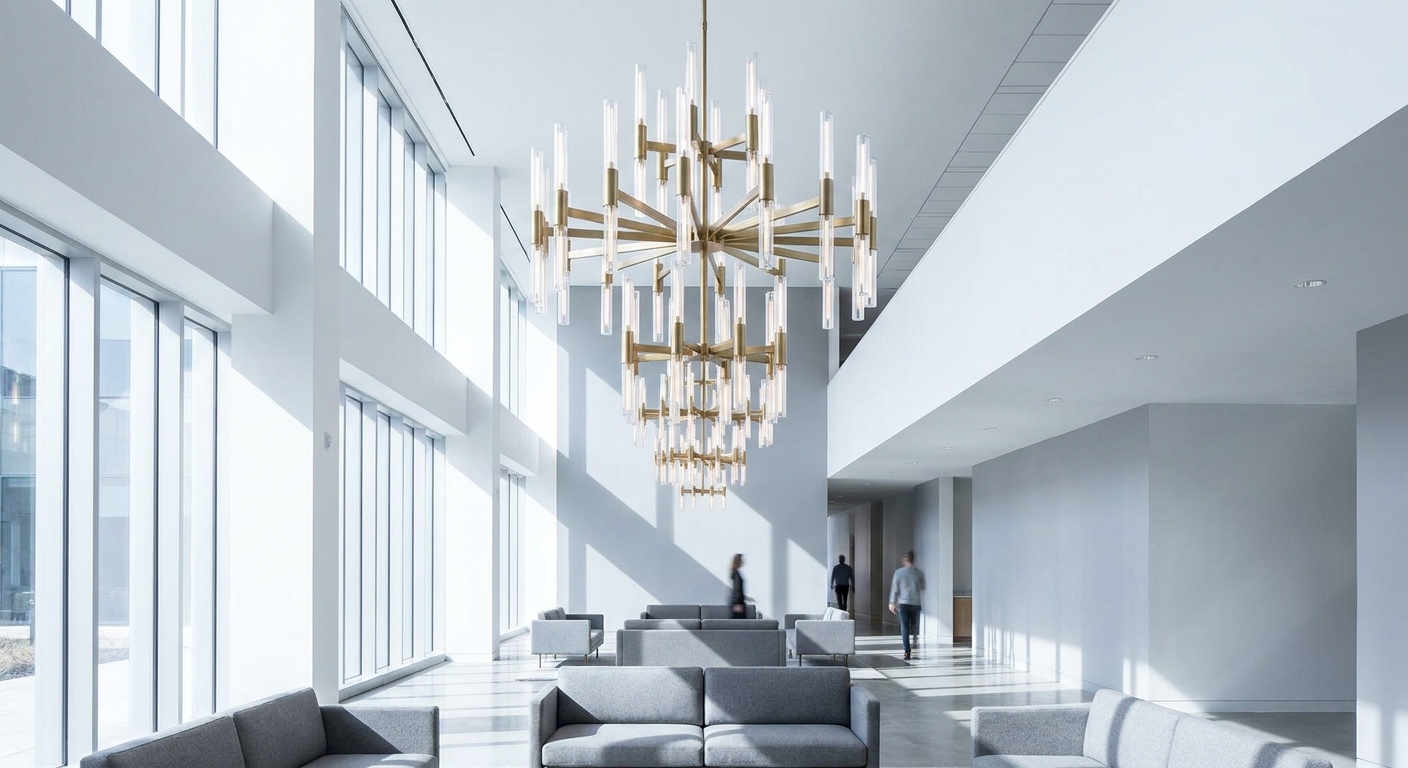
Decorative Pendants & Wall Sconces
- Stock core silhouettes in standard finishes; offer decorative finishes as longer‑lead options
- Pre‑wired canopy kits and aircraft cable mounting variants
- LED modules serviceable and replaceable
-
Track and Accent Fixtures
- Adjustable spots with field‑replaceable optics, MR16 analog alternatives and integrated LED
- Available with several beam angles and accessories
-
Controls & Drivers
- DALI‑2 controllers, Bluetooth Mesh nodes, PoE interface devices
- Common driver SKUs suitable for retrofit to reduce project delay
-
Emergency & Backup Modules
- Hold a supply of self‑contained emergency drivers and retrofit kits compatible with major downlight families
-
Spare Optics & Accessories
- Lenses, honeycombs, baffles, and trims for popular downlight sizes
- Mounting hardware and plastering rings
-
Documentation Kits
- Ready BIM models, IES files, photometric reports, compliance documentation packages
Implementation Checklist for Q3
- Audit current SKUs and remove low‑velocity, high‑space items.
- Identify 8–12 core SKUs to be fully stocked and 10–20 configurables to keep as engine‑level inventory.
- Negotiate consignment or VMI with key suppliers for expensive linear and decorative ranges.
- Share project forecasts and secure production slots for anticipated year‑end programs.
- Prepare documentation bundles and BIM assets for rapid spec adoption by architects.
- Train sales teams on specification language: TM‑30, LM‑79, LM‑80, DALI‑2, IP/IK ratings, warm‑dim vs tunable white.
Conclusion
Q3 is the strategic window to lock in supply, align inventory with evolving design trends, and reduce the lead‑time risk that can derail year‑end hospitality projects. Distributors who prioritize certified, serviceable fixtures—and back them with controls, spare parts and complete documentation—become the go‑to partners for architects and hotel designers under tight schedules.
If you’d like a tailored Q3 stocking plan for your market footprint, or an SKU rationalization review aligned to hospitality spec trends, contact the Artilumen team. We can provide sales velocity benchmarks, BOM consolidation advice, and vendor‑managed inventory options to ensure you meet year‑end demand with confidence.