
Introduction
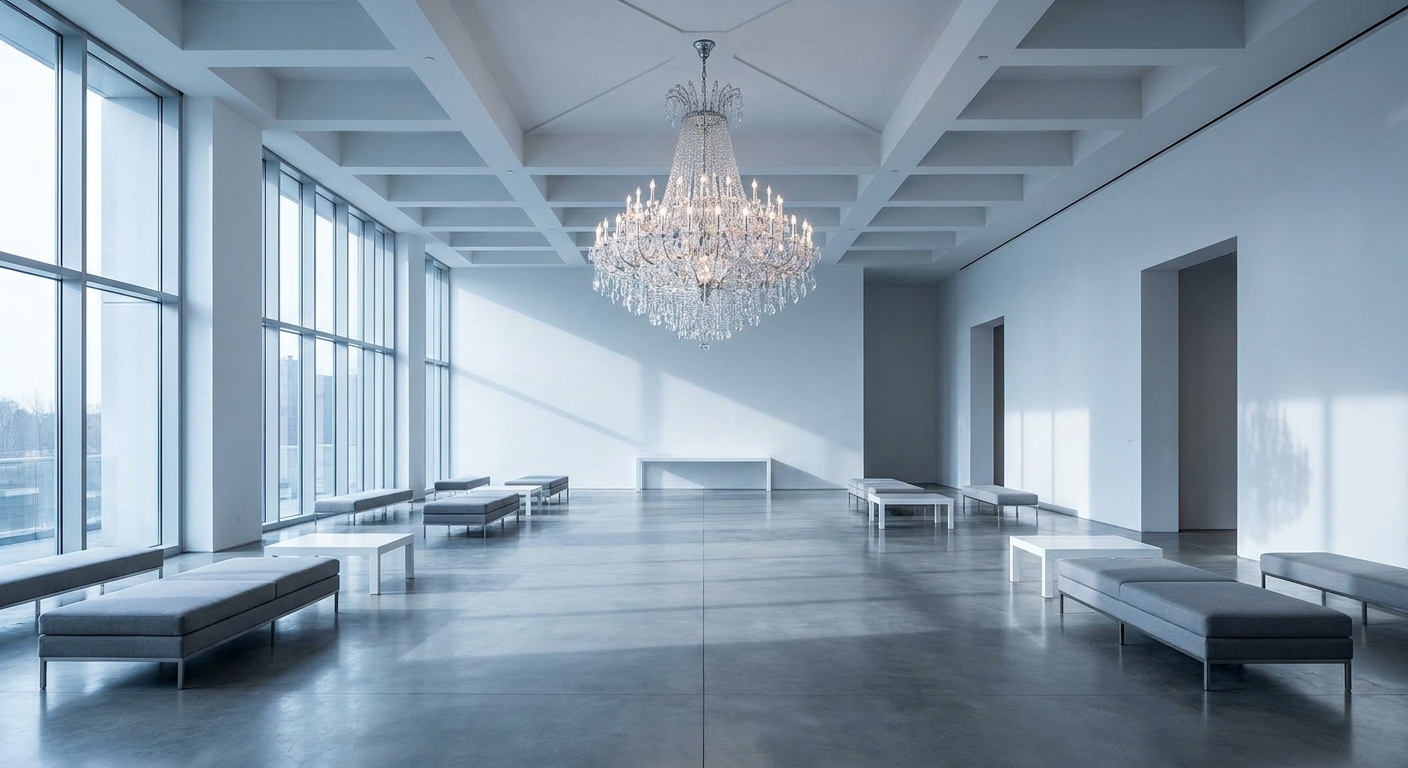
Crystal chandeliers remain an unmistakable symbol of luxury in high-end ballrooms and public hotel spaces. For architects and hotel designers, these luminaires are not merely decorative: they are major functional elements that shape guest perception, drive social media impressions, and affect operational budgets over years. Selecting the right crystal chandelier for a luxury ballroom requires balancing aesthetic ambition with hard commercial realities — quality assurance, certification compliance, predictable lead times, sustainable performance, and manageable total cost of ownership.
This guide translates aesthetic trends into practical specification, procurement, and installation strategies. It is written for design teams and procurement managers who must deliver memorable spaces on schedule, while meeting safety, energy, and maintenance requirements.
Key Industry Insight
Crystal chandeliers are re-emerging in contemporary hospitality projects as “sculptural luminaires”: large-scale, bespoke pieces that combine traditional crystal craftsmanship with modern LED technology and lighting controls. However, the commercial success of these installations depends on addressing a set of persistent B2B pain points.
Major pain points architects and hotel operators face:
- Quality assurance and lifecycle performance: ensuring crystals retain brilliance, finishes resist corrosion, and LEDs maintain lumen output across years.
- Lead time and project scheduling: custom pieces often entail long manufacturing cycles and complex logistics that can delay fit-out milestones.
- Certification and code compliance: electrical safety, photometric testing, and local building regulations must be satisfied before commissioning.
- Integration and maintenance: ensuring chandeliers interface with control systems, allow for safe cleaning/servicing, and minimize downtime.
- Cost transparency and ROI: capital cost vs. energy/maintenance savings over the lifecycle.
Design trends influencing specification:
- Warm-dim LED technology and layered color temperatures to emulate incandescent sparkle while reducing energy consumption.
- Modular and segmented chandeliers that allow phased delivery and inset installation to meet tight schedules.
- Mixed-material approaches (metalwork frames with hand-cut crystal elements) for lighter weight and greater acoustic and sightline control.
- Dynamic scene control for event-driven atmospheres, using DALI, DMX, or networked lighting protocols.
Practical implications:
- Architects must work with lighting manufacturers early to refine hanger positions, ceiling penetrations, and structural reinforcement.
- Procurement teams should specify required certifications (LM-79, LM-80/TM-21, IEC/EN or UL listings) and agree lead-time buffers for custom finishes and crystal supply.
- Owners should evaluate lifecycle cost models that factor in energy (LED efficiency), cleaning regimes (accessibility), and lamp/driver replacement.
Technical Detail
Designing and specifying a crystal chandelier for a luxury ballroom requires detailed technical alignment across optics, electricals, mechanical, and regulatory domains.
Optical and photometric considerations:
- CRI and color fidelity: Specify minimum CRI 90 for natural skin tones and accurate material rendering in hospitality spaces. Consider TM-30 for advanced color rendering assessment when finishing and textiles are critical.
- Warm-dim behavior: Request warm-dim curves from manufacturers (emit CCT behavior from 3000K down to 1800K or equivalent) to reproduce incandescent warm-up under dimming.
- Glare and distribution: Large chandeliers can create localized glare. Provide acceptance criteria (UGR or luminaire cut-off angles) and request photometric files (IES/IESNA and/or Eulumdat) and photometric studies for critical sightlines.
- Lumen maintenance: Require LM-79 reports for the luminaire and LM-80/TM-21 data for LED sources to predict L70 or L90 lifetimes.
Electrical and control systems:
- Dimming protocols: Specify preferred protocol (DALI-2, DMX512, 0–10V) and request compatibility testing for scene-based control integration with building management systems (BMS).
- Driver accessibility: Confirm driver locations, service access panels, and spare-driver allowances in the specification.
- Power and surge protection: Define inrush current limits and surge protection requirements for installations with many fixtures tied to a single electrical distribution.
Structural and mechanical:
- Weight and anchor specification: Require a certified structural report and mounting hardware signed by a licensed structural engineer for each site. Chandeliers often concentrate significant point loads — seismic and live-load considerations are non-negotiable in many jurisdictions.
- Modular assembly: Specify separation of heavy elements into subsections with mechanical interlocks to enable multi-stage installation and on-site assembly by riggers.
- Finish durability: For coastal or humid locations, require corrosion-resistant finishes (e.g., stainless steel anchors, sealed lacquer, electroplated finishes per industry standard) and salt-spray test results when relevant.
Certifications and compliance:
- Safety standards: Require applicable luminaire standards such as IEC/EN 60598 for Europe, UL 1598 or ETL for North America, and local equivalents. Electrical components should meet CE or cUL requirements as appropriate.
- Environmental and material compliance: Include RoHS and REACH clauses for materials and components; specify lead-free crystal options.
- Performance verification: Request independent, third-party testing reports (LM-79 photometric, LM-80/TM-21 LED data, IP and IK impact ratings where relevant).
- Quality systems: Prefer suppliers with ISO 9001 certification and documented factory inspection and testing procedures.
Logistics, lead time and procurement strategy:
- Lead time transparency: Custom crystal elements, hand-finishes, and bespoke metalwork often extend lead times. Request a complete production schedule during tender — from tooling and sample approval to production runs and shipment — and insert milestone-based payments linked to delivery guarantees.
- Phased delivery and on-site storage: For renovations or phased builds, specify modular deliveries and safe storage conditions on-site to protect fragile components.
- Mock-ups and approvals: Budget time and cost for full-scale mock-ups or prototype units for client sign-off. Mock-ups reduce downstream rework but require early scheduling.
- Customs and shipping: Ensure the supplier provides HS codes, packaging specifications, and insured logistics options for high-value cargo. Plan for potential customs inspection delays.
Maintenance and operations:
- Cleaning regimes: Include cleaning access strategies and protective maintenance plans. Provide removable crystal elements or maintenance hoists where ceiling height is significant.
- Spare parts and replacement policy: Contractually specify lead times for replacement crystals and modules, and agree minimum spares inventory to be provided at handover.
- Training and documentation: Require supplier-provided maintenance manuals, electrical schematics, and on-site training for hotel engineering teams.
“A chandelier in a ballroom is both an art object and a technical system — specify it with the same rigor you would an HVAC unit. Early coordination between architects, lighting designers, and manufacturers is what turns visual ambition into a deliverable, maintainable asset.”
Conclusion
Crystal chandeliers can provide an enduring focal point for luxury ballrooms, delivering emotional impact and strong brand identity for hospitality operators. But their successful integration into a project depends on precise specification, rigorous testing, predictable lead times, and robust aftercare planning. Architects and hotel designers should prioritize early manufacturer engagement, insist on verifiable photometric and safety data, and choose modular strategies that mitigate schedule risk.
At Artilumen, we partner with design teams to provide:
- Detailed technical documentation (IES files, LM-79/LM-80 reports, BIM families)
- Certified testing and compliance support (UL/CE/IEC and environmental standards)
- Prototype and mock-up services, modular manufacturing, and phased delivery plans
- Lifecycle cost models, maintenance plans, and spare parts warranties
Contact the Artilumen team for tailored specifications, sample programs, and lead-time estimates to ensure your ballroom lighting achieves both aesthetic distinction and operational reliability. Our specialists will provide BIM assets, photometric studies, and a production timeline aligned to your construction milestones — ensuring the chandelier you envision is the chandelier you receive.