
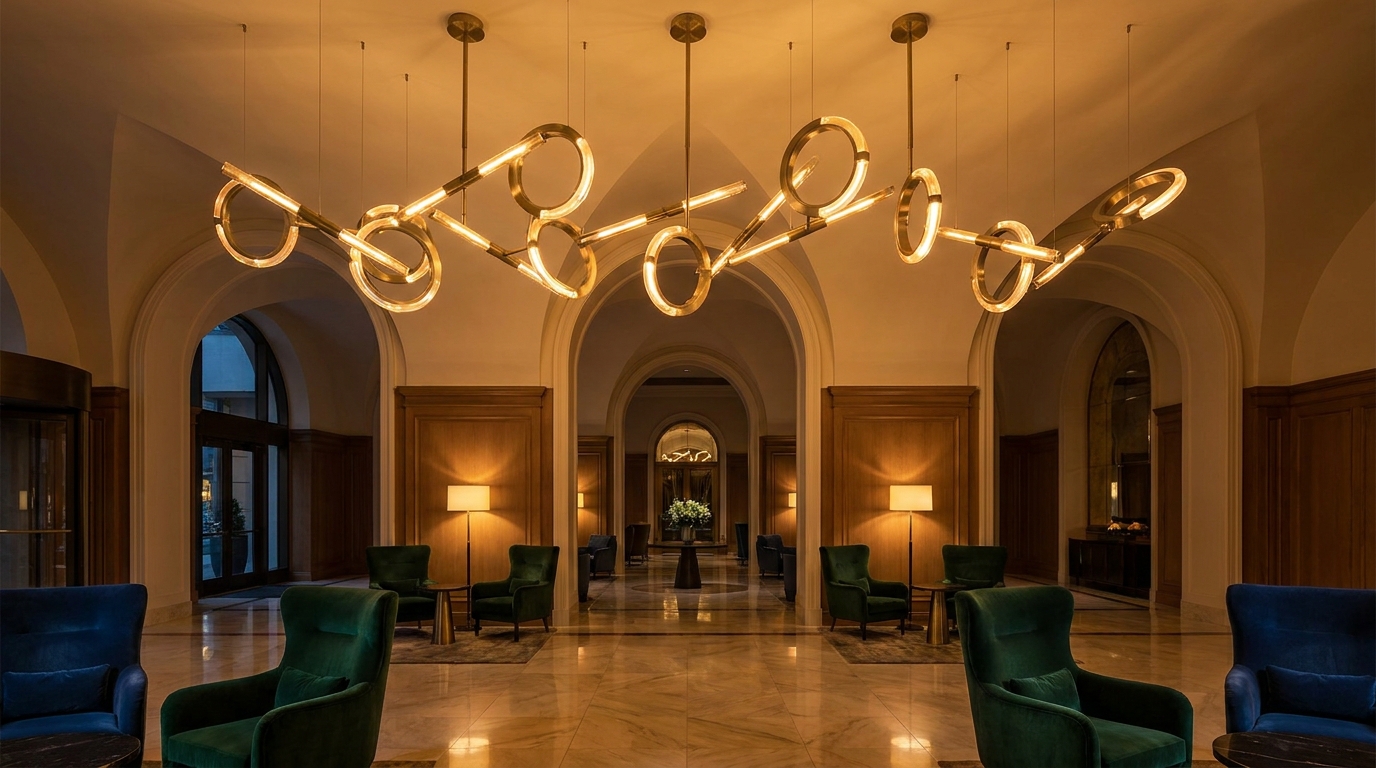
Introduction
Architects and hotel designers increasingly specify custom lighting to create differentiated guest experiences while meeting sustainability and performance targets. Yet the practical reality of minimum order quantities (MOQ) can complicate procurement, inflate budgets, and extend lead times—especially for boutique properties, phased renovations, or projects that require small-batch bespoke fixtures. This article translates MOQ challenges into pragmatic strategies for specification teams and procurement managers. We focus on core B2B concerns: quality control, predictable lead times, certification compliance, and aligning design ambitions with production realities.
Key Industry Insight
Design intent and manufacturing economics often clash when order volumes are low. Manufacturers traditionally set MOQs to amortize tooling, minimize changeovers, and keep per-unit costs viable. For designers, however, a MOQ that exceeds design needs can force concessions—compromised finishes, batch-matched lighting, or large inventory purchases.
Contemporary manufacturing advances—modular architecture, CNC flexibility, standardized LED modules, and digital color-matching—have reduced the friction between bespoke design and small batches. The best commercial lighting partners bridge the gap by offering transparent MOQ policies, tiered pricing, and production pathways that reduce lead time without sacrificing photometric performance or compliance.
Key priorities for design and procurement teams:
- Ensure consistent photometric output and color fidelity across small runs.
- Minimize lead time variance to align with construction schedules.
- Maintain full certification documentation (LM-79/LM-80, CE/ETL/UL, RoHS).
- Preserve aesthetic fidelity: finishes, optics, and control compatibility.
Common Pain Points and Business Impacts
- Higher per-unit pricing erodes design budget flexibility.
- Longer lead times create schedule risk and potential installation delays.
- Sample approval cycles become costly when manufacturers require full MOQ to commence production.
- Certification and testing of bespoke variants can add weeks to delivery.
Practical MOQ Models for Commercial Projects
Below are production and commercial models that architects and hotel designers can use to manage MOQ constraints without compromising design quality.
H2: Tiered MOQ and Modularization
- Tiered MOQ: Vendors set different MOQs for fully bespoke, semi-custom, and standard options. Prioritize semi-custom designs (standardized housings, customizable finishes or optics) to lower MOQ and cost.
- Modular luminaires: Specify designs where decorative elements (shades, bezels, trims) are separate from the engineered LED engine. This allows low-volume customization of visible parts while maintaining standardized electrical and photometric modules.
H2: MOQ Pooling and Phased Releases
- Pool MOQs across multiple properties or phases: consolidate orders for multiple hotels or suites to meet MOQ without a single project carrying full volume.
- Phased runs: negotiate initial low-quantity pilot production followed by a committed larger run once final approvals and occupancy forecasts are confirmed.
H2: Pre-approved Standards and Digital Approvals
- Use digital mock-ups, BIM objects, and photometric renderings to accelerate approval, reducing the need for multiple physical samples.
- Establish pre-approved finish palettes and approved optical options to avoid bespoke tooling for every new project.
H2: Make-to-Stock for Common Items
- For frequently used fixtures, request that manufacturers hold a small buffer stock for your account (consignment or priority stock) to mitigate lead-time issues on last-minute changes.
Technical Detail
Manufacturing and Testing Considerations for Small Batches
When the order quantity is small, technical risks rise. Focus on the following technical safeguards:
- Photometric Consistency: Require LM-79 test reports for the LED module used in the run. For color-critical applications like guest rooms and lobbies, require chromaticity consistency across the entire order (e.g., within 2-step MacAdam ellipse).
- Component Traceability: Small runs should still include full component traceability for drivers, LEDs, and control gear—vital for warranty and serviceability.
- Thermal Management: Verify that luminaire thermal design is validated for the configured LED module. Small runs sometimes use alternative drivers or modules—ensure no compromise on lumen maintenance (LM-80) or in-situ thermal tests.
- Control and Integration: Confirm compatibility with DALI, Casambi, DMX, or hotel automation systems in the small-batch configuration and request control profiles for commissioning.
- Environmental and Safety Certifications: Ensure the batch undergoes the necessary certification pathway. For exports, confirm CE marking, and for North American projects, UL/ETL where required. RoHS and REACH compliance should be documented for all parts.
Production Flexibility Tactics
- Soft Tooling and Jigs: Manufacturers can use reversible fixtures and flexible jigs to reduce setup time and cost for small runs.
- Standardized LED Engines: Insist on a common LED module across multiple SKUs. This stabilizes performance and simplifies testing.
- Small-batch Run Cards: Request a documented production run card that records settings, driver configurations, and assembly instructions to ensure repeatability for future replenishment.
“A smart MOQ strategy balances design individuality with repeatable engineering—prioritizing modular components and verified photometric outputs ensures hotels get bespoke looks without compromising performance or delivery.”
Managing Cost and Lead Time Expectations
Transparent cost modeling is essential when negotiating small-batch orders. Key levers:
- Tooling amortization: Negotiate a tooling cost cap or a one-time tooling fee that can be credited against future orders.
- Rush fees vs. schedule: Compare expedited manufacturing vs. phased delivery trade-offs. Sometimes splitting an order into an initial sample run and a follow-up production batch reduces schedule risk.
- Unit pricing clarity: Request clear breakpoints for pricing at 1, 5, 10, 25, and 50 units to see how cost scales and to plan consolidation opportunities.
- Logistics and packaging: Consolidated shipments and standardized packing reduce per-unit freight costs—especially relevant for international projects.
Specification and Procurement Best Practices
- Define fixed vs. flexible parameters: Specify non-negotiables (photometrics, color temperature, CRI, dimming protocol) and allow flexibility on secondary elements (trim profile, mounting bracket finish).
- Pre-approve suppliers: Maintain a list of vetted manufacturers willing to support low MOQ projects with clear SLAs for sampling and certifications.
- Sample policy: Insist on an approved sample program—either free or cost-offset against PO—so you can validate finish and photometrics before committing to larger quantities.
- Contractual protections: Include clauses for color/finish tolerances, replacement parts availability, and lead-time penalties to protect project schedules.
Design Trends that Inform MOQ Decisions
- Human-Centric Lighting: Prioritize consistent tunable white and circadian-ready modules across batches to ensure guest well-being and lighting continuity across spaces.
- Adaptive Aesthetics: Fixtures designed with interchangeable decorative elements align well with low MOQ strategies—replace trims and finishes without changing the engineered core.
- Sustainable Materials: Recycled metals and low-VOC finishes can be standardized to reduce bespoke material sourcing complications on small runs.
Conclusion
MOQ constraints need not be a barrier to bespoke commercial lighting. By adopting modular designs, negotiating tiered MOQs, leveraging digital approvals, and insisting on rigorous technical validation, architects and hotel designers can deliver distinctive spaces without undue cost or schedule risk. Artilumen partners with design teams to provide transparent MOQ options, documented photometric performance, and certification support—enabling small-batch customization that meets both aesthetic and operational targets.
Contact the Artilumen specification team to request an MOQ review, sample program, or project-specific production plan. We deliver photometric data, BIM assets, and certification documentation to help you specify with confidence.