
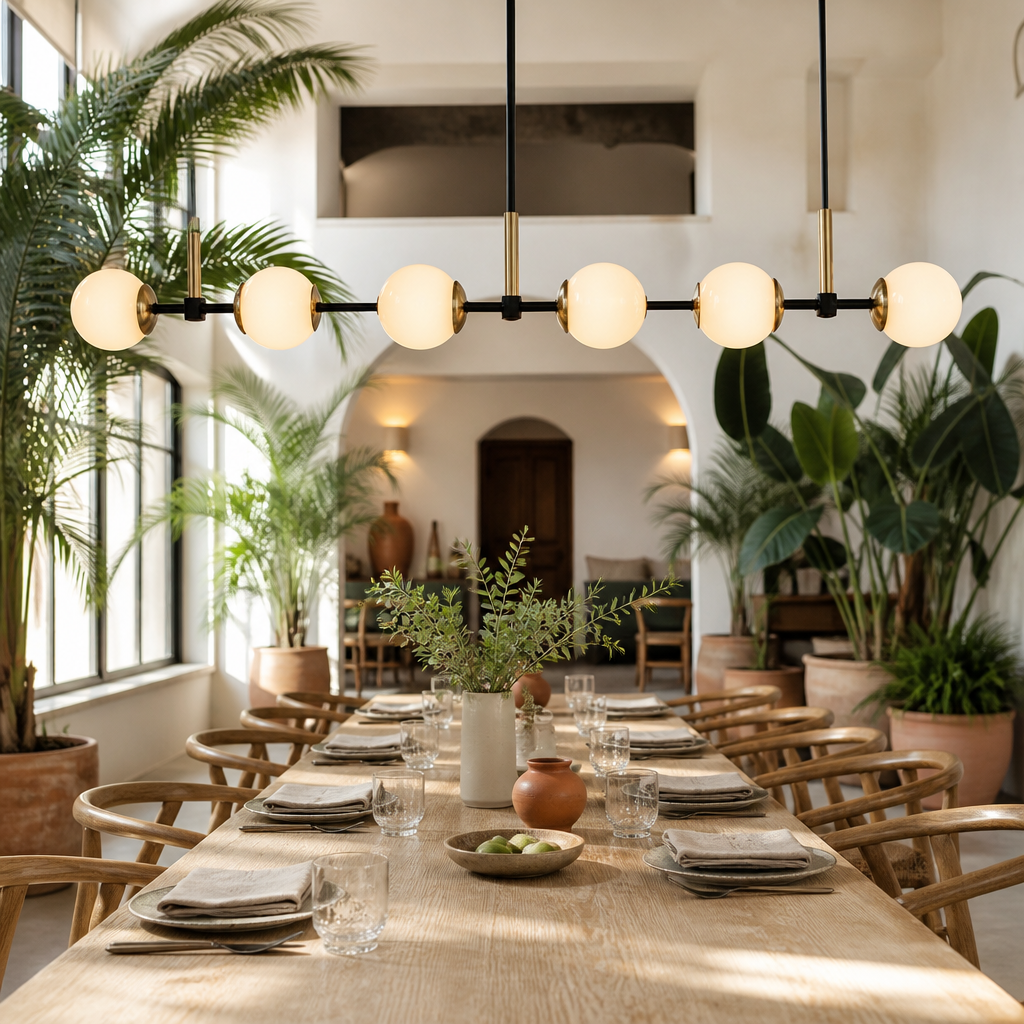
A hotel chandelier is more than a decorative object. It is the first impression of a lobby, the centerpiece of a ballroom, and often the most complicated lighting fixture in the entire building. For architects and hotel designers, specifying a chandelier requires balancing aesthetics, structural constraints, lighting performance, maintenance logistics, and budget. A residential chandelier cannot survive the operational demands of a hotel. This guide focuses on the three most misunderstood specifications in hospitality lighting: size, light source, and ingress protection.
Why Hotel Chandelier Specification Is Different from Residential Lighting
Commercial hospitality lighting operates under very different rules than residential lighting. A hotel chandelier may be switched on for 12 to 16 hours per day, every day of the year. It must withstand cleaning cycles, HVAC airflow, guest contact, and occasional impact from luggage or ladders. It also needs to be serviceable in a live environment where guest experience cannot be interrupted.
Hotel projects require documented performance. Architects need photometric data, driver specifications, mounting details, finish samples, and compliance documentation before they can approve a fixture. This is not about aesthetics alone; it is about protect the investment of the owner and the operational efficiency of the hotel team.
Performance Expectations and Lifecycle Costs
The lowest first cost is rarely the true cost of a hotel chandelier. A fixture that fails after two years creates labor costs, room downtime, and reputational risk. Specifying commercial-grade materials and components is therefore a risk management decision.
When evaluating a chandelier, ask about LED module quality, driver replacement, thermal management, and the expected service life of the finish. Some manufacturers can provide test reports and warranty details. If those documents are not available, request them. If a vendor cannot substantiate the performance of the fixture, that is a red flag. For project-specific certification and test data, contact us for details.
Design Coordination and Installation Constraints
Chandeliers are often installed in double-height spaces with complex ceilings. The structural anchorage must be reviewed by an engineer, especially in seismic zones or areas with high wind exposure. The fixture also needs space for cable management, dimming wiring, and future maintenance access. These constraints must be discussed early in the design phase, not after the concrete ceiling has been poured.
How to Determine the Right Chandelier Size for a Hotel Space
Scale is the most visible aspect of a chandelier. If it is too small, it will disappear in a large lobby. If it is too large, it will overwhelm the architecture and create maintenance obstacles. The right size depends on the room volume, the intended sightlines, and the function of the space below.
A chandelier in a lobby is not centered over a dining table. It may be positioned above a reception desk, a seating group, or the center of the circulation path. The sizing approach must therefore respect both the dimensions of the room and the vertical sightline of a guest entering the space.
Proportion and Sightline Guidelines
One common starting point for room-scale chandeliers is to combine the room length and width in feet and use that sum as a diameter reference in inches. For example, a 30-foot by 40-foot event lobby might suggest a chandelier around 70 inches in diameter. This is only a starting point. The final dimension should be adjusted for ceiling height, architectural features, and whether the chandelier is the only lighting statement or one of several.
For suspended chandeliers above walkable areas, maintaining clear pedestrian clearance is essential. Many designers use a minimum clearance of about 2.4 meters (7 feet 6 inches) from the floor. Above seating, the fixture can be lower, but it must remain out of the natural sightline of the seated guest.
For longer spaces, a single large chandelier may not be the best solution. Linear or modular chandeliers can be arranged in sequence above reception desks, dining tables, or long corridors. Provide enough spacing between fixtures to allow maintenance access and to avoid overly dense shadows.
Structural Mounting and Load-Bearing Requirements
The catalog weight of a chandelier does not include the entire installation package. Add the support cables, mounting brackets, junction boxes, and other hardware. The total dynamic load may be different, especially if the fixture uses a ceiling-mounted winch or a motorized lifting system for maintenance.
Architects should require shop drawings that identify all load paths. If the fixture is being specified for a renovation, the existing ceiling structure may not be able to support the intended chandelier. Have an engineer verify the connection point before final approval. A chandelier that looks elegant in a showroom can become a construction problem on site.
Choosing the Light Source: Color Temperature, CRI, and Dimming
The light source determines how the chandelier feels at night. It also affects how guests perceive the metal, glass, furniture, and architecture around it. For hotel environments, light sources must be selected to support the intended mood while maintaining high color rendering and stable dimming behavior.
Correlated color temperature is commonly specified in hospitality environments around 2700K or 3000K. The choice depends on the finishes and the atmosphere of the hotel. A warm color temperature can make gold and dark wood feel richer, while neutral white can enhance contemporary materials. More important than a single number is consistency across fixtures and across the entire lighting scheme.
Layered Lighting and Visual Comfort
The chandelier should be designed as part of a layered lighting plan. It may provide ambient light, accent light, or decorative sparkle. But it cannot be the only source of illumination if the room also needs task lighting at a reception desk, reading light in a lounge, or accent light on artwork.
Glare is a common problem with decorative fixtures. Bare lamping can cause uncomfortable brightness, especially when the chandelier is at eye level. Look for designs that use diffusing glass, lenses, or indirect light distribution to reduce glare while maintaining a decorative presence. The fixture should reveal the space without making guests squint.
LED Modules and Driver Compatibility
Because hotel chandeliers are increasingly LED-based, the LED module and driver become critical components. The driver must be compatible with the project’s dimming system. Hospitality projects often require flicker-free dimming from a very low percentage of light output. Not all chandeliers can achieve this.
The choice of driver is also a maintenance issue. Drivers can fail over time, and in many chandeliers they are hidden in the canopy. Ask whether the driver can be accessed without removing the entire fixture. Consider separate driver enclosures that reduce weight on the chandelier and allow easier replacement. If specific dimming compatibility or flicker performance is required, ask the manufacturer for test data. Contact us for details on a particular fixture.
Decoding Ingress Protection (IP) Ratings for Hotel Chandeliers
The IP rating of a chandelier defines its ability to resist the entry of solid particles and water. The first digit refers to protection against foreign bodies such as dust, and the second digit refers to protection against moisture. Choosing the wrong IP rating can cause premature corrosion, electrical failure, or a fire risk.
Most indoor dry hotel areas can use fixtures with a low IP rating, as long as they are maintained properly. However, the specification must be evaluated based on location. A chandelier above an indoor fountain area, a poolside lounge, or an open balcony needs far more protection than a lobby fixture.
IP20 vs. IP44: Why Location Dictates Protection
An IP20 fixture is protected against solid objects larger than 12 millimeters, such as a finger, but offers no meaningful water protection. This is acceptable for most dry, enclosed spaces. However, in a semi-outdoor entrance or a humid wellness area, an IP20 chandelier may be risky.
An IP44 fixture is protected against solids larger than 1 millimeter and against splashing water from any direction. This is often used for bathrooms, covered outdoor terraces, and poolside environments. The IP rating affects not only the component selection but also the material finish and gasket design. A chandelier can look the same from the outside but have a very different internal specification depending on its IP rating.
Coastal and Outdoor Installations
For coastal hotels, salt spray and humidity are aggressive. Even fixtures designed for outdoor use may require marine-grade finishes. A chandelier with an open bottom can allow salt-laden air to reach electrical connections. In these environments, specify fixtures with sealed joints, stainless steel hardware, and corrosion-resistant finishes. If a fixture must maintain a particular aesthetic but does not naturally meet the required IP rating, a custom engineering solution may be necessary. Contact us for details on project-specific enclosures and materials.
Material Quality, Finishes, and Long-Term Maintenance
The visual finish of a chandelier is what designers evaluate in the showroom, but the long-term durability of that finish is what hotel engineers will remember. Thin plating can chip, polished surfaces can tarnish, and decorative glass can be difficult to replace. Specifying robust materials and finishes is essential.
Ask for physical finish samples and understand the cleaning protocols. Some finishes require special chemicals that housekeeping staff may not use. If a finish is difficult to maintain, provide a maintenance manual and train the hotel engineering team. In hotels, maintenance is not a one-time event. It is a recurring operational cost.
Certifications and Compliance Framework
Compliance with local electrical codes and product certifications is non-negotiable for commercial hospitality projects. Certification marks and test reports vary by market. Some regions require specific electrical safety approvals, while others require fire-resistance or environmental declarations. These documents must align with the installed version of the fixture, not just a similar model.
Do not accept vague claims about certification. Ask for the exact report and the certificate number. If a fixture is customized, the certification may need to be re-evaluated. This is one of the most important reasons to work with a manufacturer that understands commercial project documentation. For product-specific certification information, contact us for details.
2026 Design Trends: Sculptural, Modular, and Adaptive Lighting
The role of the hotel chandelier is changing. It is no longer only a traditional crystal object hanging in the lobby. Hotel designers are increasingly looking for sculptural installations that create a sense of place, support brand identity, and respond to the architecture.
Trends in 2026 favor fixtures that feel bespoke without causing unreasonable lead time. Modular systems allow designers to create unique compositions from standardized components. This approach reduces tooling cost and timeline while still achieving a custom design. Chandeliers with layered materials such as glass, metal, and hand-finished surfaces are also popular, particularly in luxury hospitality.
Customization and Modularity
From a procurement perspective, modular chandeliers are easier to maintain. A damaged component can be replaced without rebuilding the entire fixture. They are also easier to transport, especially for large atriums where the chandelier must be assembled on site.
If the design team wants a fully custom chandelier, establish clear parameters early: maximum dimensions, weight limits, lighting performance requirements, and installation sequence. This prevents expensive redesigns later in the project. A reputable manufacturer should be willing to discuss feasibility, lead time, and budget before committing to a concept.
“A hotel chandelier is first measured by the eye, then by decades of maintenance. The most beautiful specification is the one that keeps its performance long after the opening night.” — Liz Lin, Lead Lighting Strategist at Artilumen
Working with a Manufacturer: Lead Time, Samples, and Customization
In hospitality projects, lead time is one of the biggest pain points. A chandelier may be the critical path for a lobby fit-out. If the fixture arrives late, the entire opening schedule is affected. Designers should ask for realistic production timelines, including the time needed for prototyping, finishes, certifications, and shipping.
Always request a pre-production sample or a full-scale mock-up when possible. A photograph or render does not show how the fixture will reflect light, how the finish looks under warm lighting, or how the scale feels in the space. A mock-up is especially important for signature chandeliers in visible areas.
Prototyping and Budget Considerations
Budget discussions should include not just the cost of the fixture but also the cost of installation, rigging, electrical connection, and future maintenance. If a chandelier has a complex installation sequence, the installation cost can exceed the cost of the fixture itself. Work with the manufacturer and the general contractor to create a realistic budget.
Value engineering can be beneficial if it does not compromise core performance. A lower-grade LED module might save cost initially but create problems with color consistency or dimming performance. Instead of downgrading the fixtures, consider simplifying the ornamentation or reducing the total number of fixtures while keeping the lighting quality intact.
Conclusion
Hotel chandeliers require a rigorous approach that goes beyond aesthetics. Size must respond to architecture and human circulation. Light source selection must satisfy both the visual atmosphere and the technical requirements of dimming, color rendering, and maintenance. Ingress protection must be matched to the environment, especially in exposed or coastal settings.
At the same time, the manufacturing partner must be able to provide the documentation, samples, and engineering support that a commercial project demands. The right chandelier is not just beautiful; it is predictable, serviceable, and compliant.
Artilumen is a commercial lighting manufacturer focused on tailored lighting solutions for hospitality and architecture. From concept development to final dimming integration, our team supports architects and hotel designers with technical clarity and practical guidance. Whether you are specifying a single lobby chandelier or multiple custom fixtures across an entire hotel, contact us for details. We will help you evaluate size, light source, protection, and certification according to the specific needs of your project.