Introduction
For architects and hotel designers, lighting is never an off-the-shelf decision. A guest room, lobby, corridor, or spa demands more than illumination—it demands atmosphere, brand alignment, and operational reliability. When a project calls for a luminaire that does not exist in a standard catalog, the question becomes: What can the factory actually customize?
The original question, in Chinese, is often framed as: “定制灯具的色温/尺寸/材质选项:工厂能改哪些?” In English, that translates to a practical B2B concern—how far can a manufacturer go in adjusting color temperature, physical dimensions, and materials without sacrificing quality, lead time, or certification? This article answers that question from a factory perspective, specifically for commercial lighting partners who need confidence, not just options.
The Factory’s Role in Custom Luminaire Design
A custom luminaire project is not simply about changing a component. It is a process of engineering, testing, and documentation. When Artilumen approaches customization, we evaluate every modification against three criteria: optical performance, mechanical integrity, and compliance viability. A change that looks simple on paper—like a shorter suspension length or a different finish—can affect thermal management, light distribution, and even fire safety classifications.
For B2B buyers, the value of working directly with a manufacturer is the ability to ask, “What happens if we change this?” and receive an honest, engineering-based answer. A factory cannot always do everything, but it should always be transparent about what is possible, what is optional, and what requires additional validation. That transparency is the foundation of a successful custom lighting program.
Color Temperature: Beyond 3000K
Color temperature is often the first customization request. Hotels may demand 2700K for a warm, intimate restaurant atmosphere, 3000K for guest corridors, or 4000K for back-of-house utility spaces. Some projects even require tunable white systems that allow the color temperature to shift throughout the day.
At the factory level, color temperature customization can be achieved through LED binning, driver programming, or both. However, the decision is never about the LED alone. The fixture’s optic, reflector, lens, and diffuser all influence the final color appearance. A change in color temperature should be tested with the complete optical system to ensure consistency across the entire installation.
Equally important is color consistency. A custom color temperature with loose tolerance will create uneven lighting across a lobby or a long corridor. Professional lighting manufacturers should provide a clear specification for chromaticity tolerance, such as MacAdam ellipses, and verify that the custom configuration meets the project’s visual requirements. For specific product documentation and tolerances, contact us for details.
Dimensions: Engineering Meets Aesthetics
Size customization is perhaps the most visible form of tailor-made lighting. A linear pendant may need to be 10 centimeters shorter to align with a ceiling grid. A wall sconce might require a deeper projection to accommodate a textured wall surface. A custom chandelier could demand a unique mounting plate to suit a historic building’s structure.
But changing dimensions is not a simple CAD exercise. Heat dissipation, cable routing, driver placement, and structural load all change with size. A shorter luminaire may have less internal volume for the driver and wiring, which can affect thermal performance. A longer luminaire may need additional mounting points or a stronger main support.
For architects, the key is to bring dimension requests to the factory early. When we know the final dimensions before tooling and samples are produced, we can optimize the design for manufacturability and lead time. If a size change happens after prototyping, the cost and schedule impact can be significant. The most successful custom lighting projects treat dimensions as a collaborative specification, not an afterthought.
Materials: Balancing Durability, Finish, and Budget
Material selection in hospitality lighting is a statement of design intent. Brushed brass, blackened steel, hand-blown glass, natural wood, stone veneer, or alternative materials can define a space. But every material brings its own constraints.
Metal finishes affect reflectivity, corrosion resistance, and durability in coastal or high-humidity environments. Painted finishes require specific preparation and curing processes to achieve consistent color and resistance to chipping. Glass and acrylic diffusers influence light transmission, glare, and appearance, but also add weight and fragility considerations. Wood and organic materials bring warmth but demand careful finishing and maintenance planning.
A capable factory will not simply say “yes” to a material request. It will ask about the application, the environment, and the expected lifecycle. In some cases, a similar material with better performance can achieve the same aesthetic with fewer long-term issues. This is where a manufacturer’s experience becomes a real asset to the design team.
The B2B Risks: Quality, Lead Time, and Certification
Customization can be exciting during the design phase, but B2B buyers must manage real-world risks. Three concerns dominate every conversation with architects and hotel developers: quality consistency, project lead time, and certification compliance.
Quality Control and Documentation
Custom products require custom quality standards. A factory that produces the same standard catalog item every day can rely on existing fixtures, test reports, and production knowledge. A custom luminaire, however, needs clear inspection criteria. What are the acceptable tolerances for finish, dimensions, and light output? How many samples must be approved before mass production? What will the final inspection include?
Without a controlled quality process, a “small” customization can lead to visible inconsistencies across a hotel project. For example, a custom metal finish may appear slightly different across batches if the factory does not calibrate its finishing line. To avoid this, Artilumen recommends a pre-production sample approval process for every custom option. This gives the design team certainty and gives the factory a documented benchmark.
Lead Time Planning
Customization inherently adds time. It involves engineering review, material sourcing, sample fabrication, testing, and approval cycles. For a hotel project with an opening date already announced, lead time is not negotiable. The solution is early collaboration.
When a designer shares the full specification and architectural drawings at the beginning of a project, the factory can identify long-lead materials or unusual components immediately. In some cases, we can propose alternative materials already in stock that achieve a similar look. But if the design requires a unique custom size or a rare finish, waiting until the final procurement phase will create unnecessary risk. Contact us for details about current lead times for custom products; the answer depends on the complexity of the configuration and the production calendar.
Certification and Compliance
This is often the most underestimated aspect of custom lighting. A standard luminaire that has already been certified for a specific market can be installed with confidence. A custom version may require additional testing or documentation to prove compliance. Changing the size, material, or electrical configuration can affect the fixture’s certification status.
For example, a longer luminaire may produce different temperatures at the driver compartment, requiring a reassessment of thermal ratings. A different shade material may alter the fixture’s fire resistance. A custom finish may influence grounding continuity or electromagnetic compatibility. None of these issues are necessarily blockers, but they must be managed.
At Artilumen, we work with partners to understand the certification requirements of each target market. We do not publish generic statements about certifications because the validity depends on the final configuration and destination. Instead, we assess each custom project individually and provide the necessary documentation where applicable. If a particular certification is required for your project, contact us for details and we will clarify what is possible before production begins.
Design Trends Driving Custom Requests
Custom lighting is not only about fitting a space; it is also about responding to broader design trends in hospitality.
One current direction is scaled minimalism. Designers are asking for simple geometric forms with smaller profiles and softer light sources. This trend drives dimension-related customizations—thinner frames, shorter downlight lengths, and compact wall sconces that still produce a wide, comfortable distribution.
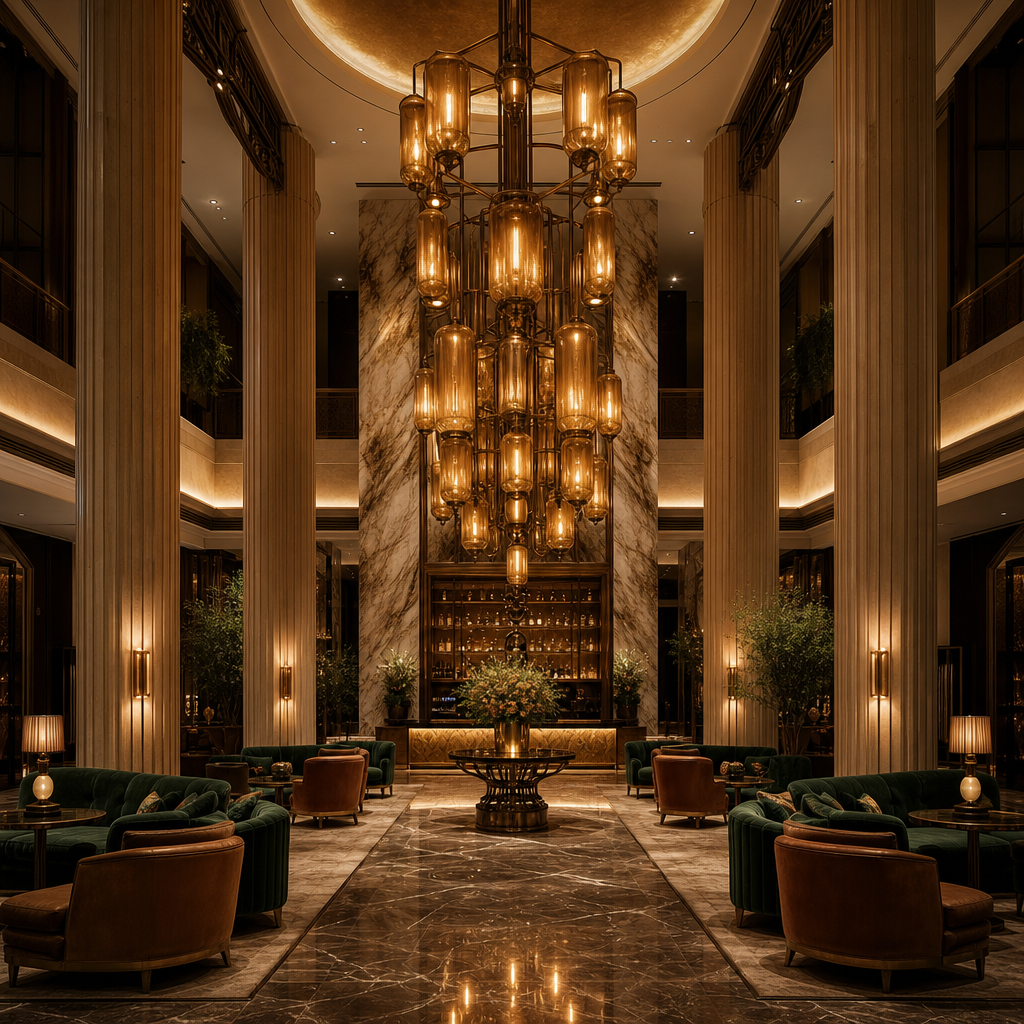
Another trend is layered texture. Hotel interiors are moving away from single-material monotony and toward combinations of matte metals, natural stone, and hand-finished glass. Material customization allows lighting fixtures to feel like part of the architectural surface rather than an attached appliance.
There is also growing interest in human-centric lighting. Color temperature customization is no longer static; many projects ask for dynamic tuning throughout the day to support guest comfort. This requires more than a fixed 2700K or 3000K option. It requires tunable drivers, compatible control systems, and a precise optical design that maintains performance across the entire range.
These trends raise the bar for manufacturers. They also create an opportunity for architects and designers to differentiate their projects through custom lighting—provided they partner with a factory that understands both design and engineering.
“The best custom lighting is not a compromise between vision and reality. It is a collaboration where the factory’s knowledge becomes part of the design process, not an obstacle to it.”
Conclusion
The answer to the question “What can the factory customize?” is: more than many designers expect, but always within the boundaries of engineering, quality, and compliance. Color temperature can be adjusted to create the desired mood, dimensions can be modified to fit the architecture, and materials can be selected to express the brand—but every change should be evaluated through a rigorous manufacturing lens.
For B2B professionals, the practical conclusion is simple: bring the factory into the conversation early. Early engagement means better engineering, more realistic lead times, clearer documentation, and fewer surprises at installation.
If you are working on a hospitality project and need custom lighting options for color temperature, dimensions, or materials, contact the Artilumen team for details. We will be transparent about what is possible, what it takes, and how we can support your design vision—without compromising quality or compliance.