Introduction
For architects and hotel designers, wall lighting is more than a decorative afterthought. It defines the transition from the public realm into a private guestroom, shapes the user’s first and last impression, and plays a critical role in maintenance and energy behavior across the property. Yet one of the most common specification mistakes in hospitality projects is treating corridor wall lamps and guestroom wall lamps as interchangeable.
At first glance, the difference seems small: both are mounted on walls, both support the interior design style, and both need to be aesthetically coherent. In practice, these two applications have fundamentally different functional, technical, and procurement requirements. A wall lamp that works well in a corridor can fail in a guestroom, and a guestroom sconce can create glare, maintenance problems, or compliance risks in a corridor. Understanding these differences before you finalize a BOM can save your project time, budget, and reputational risk.
This article outlines the key design and engineering parameters that separate corridor wall lighting from guestroom wall lighting, and provides a practical framework for selecting the right fixtures with confidence.
One Wall Light Cannot Solve Two Problems
Functional Purpose: Wayfinding vs. Layered Control
A hotel corridor is a circulation space. Its primary lighting task is to provide safe, intuitive navigation while reinforcing the interior architecture. Wall lighting in corridors needs to create a continuous visual rhythm, guide guests toward exits or room entrances, and avoid harsh brightness that becomes uncomfortable over a long walk. Because corridors often have uniform ceiling surfaces or low ceiling heights, wall lamps are frequently used to supplement ceiling lights with vertical illumination.
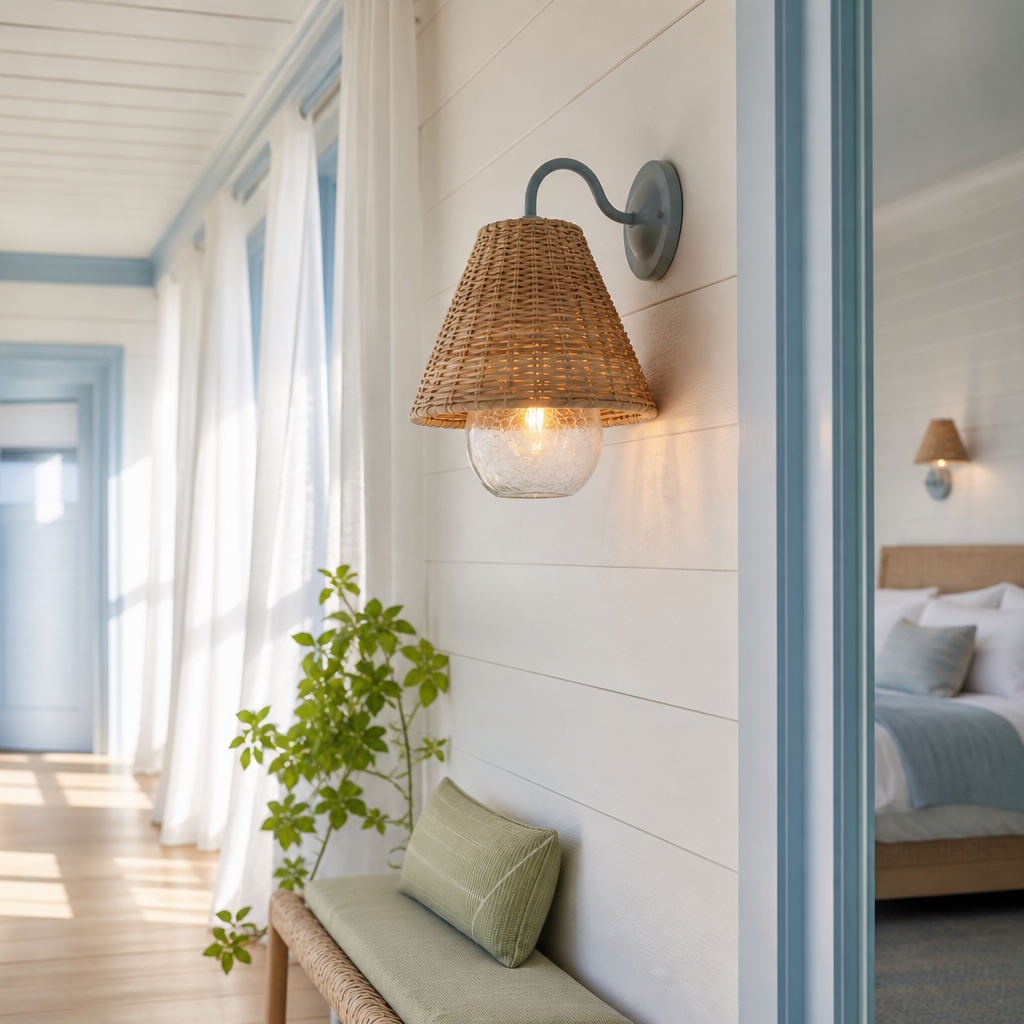
Guestroom wall lighting is different. It must support multiple activities: reading in bed, working at a desk, preparing for the evening, and relaxing with low ambient light. That requires flexibility—ideally dimmable outputs, switchable layers, and careful positioning relative to the bed and headboard. A guestroom wall lamp is an intimate product; it is touched, adjusted, and observed at close range. The user experience, including flicker-free dimming and comfortable color temperature, matters more than in a corridor where people are simply passing through.
Optical Distribution: The Hidden Differentiator
The photometric behavior of a wall lamp is one of the most overlooked choices in hospitality projects. Corridor wall lights often need asymmetric or wall-wash distributions to produce even vertical brightness across a long pathway. If a fixture has a narrow downward spot, it may create a “sawtooth” pattern along the wall, with alternating pools of light and shadow. This can compromise the perception of cleanliness and safety, especially on long hallway sightlines.
Guestroom wall lights, on the other hand, are frequently used as reading or bedside task lights. They need controlled distributions that illuminate the immediate area without glaring into the eyes of someone lying in bed. That means optical shields, internal baffles, or indirect/direct combinations are usually required. A simple exposed lamp in a decorative shade may look beautiful in a renders, but in a real install, it often creates uncomfortable luminance contrast in a small room.
“A wall light in a corridor is an architectural instrument; a wall light in a guestroom is a personal interface.”
B2B Considerations: Quality, Maintenance, and Lifecycle
Corridor Fixtures Reset the Operating Standard
Corridor lighting runs for longer operating hours than most guestroom lighting—often 12 to 24 hours per day depending on daylight harvesting and control strategies. That operating profile has serious implications for driver life, thermal management, and maintenance intervals. Specifiers should focus on the expected lifetime of the complete fixture, not just the LED chip, because a driver failure in a corridor means scaffolding, labor, and disruption to hotel operations.
Corridor wall lamps also need robust housing and ingress protection against dust and cleaning processes. The wall surface behind and around the fixture can accumulate heat over time; without proper thermal design, lumen depreciation accelerates, and the fixture will not deliver the lighting levels specified during the design phase.
Guestroom Fixtures Face a Different Kind of Abuse
Guestroom wall lights are exposed to constant human interaction. Guests move them, lean on them, and occasionally knock suitcases into them. Finish durability is therefore critical. A matte black or plated finish that looks appealing in a sample can show fingerprints, scratches, or corrosion after only a few months of housekeeping. Wall lights near beds also need careful attention to fixture surface temperature, especially if guests may touch them during sleep or while reading.
Relamping and maintenance are more than an afterthought. Corridor fixtures often need to be relamped without ladders each time; guestroom fixtures need to be accessible for housekeeping staff with minimal disruption. The specification should include a clear understanding of how the lamp or LED module is accessed, replaced, and checked.
Design Trends in Hospitality Wall Lighting
Invisible Hardware, Visible Materiality
Current hotel design trends are moving away from decorative fixtures that look like traditional lamps and toward architectural lighting elements that disappear into the wall. Recessed wall lights, integrated indirect coves, and sculptural sconces are increasingly specified to create a sense of calm and minimalism. For corridor applications, this means fixtures that provide even washes of light and become part of the architectural language. For guestrooms, the trend is toward compact forms that compliment the bed wall without occupying too much visual space.
At the same time, materiality matters. Designers are selecting wall lighting not only for its output but for its tactile finish. Brass, bronze, and textured glass are common. But every material choice affects performance and maintenance. For example, dark finishes absorb light and can reduce the efficiency of the fixture, requiring more output from the LED source. This is not a reason to avoid them, but it reinforces the need for early photometric testing and full-scale mockups.
Human-Centric Lighting and Tunable White
Hospitality lighting is increasingly influenced by human-centric lighting principles. Guests want warm, calming light in the evening and clearer, more energizing light in the morning. In guestrooms, wall lamps that support tunable white or variable color temperature can enhance the guest experience, especially in luxury properties. However, this increases the complexity of drivers, controls, and wiring. Designers must coordinate with FF&E, controls integrators, and electrical engineers early in the design process.
Corridors also benefit from thoughtful color consistency. A neutral 3000K or warm 2700K is common, but the exact CCT should be matched to the finishes and architectural intent. Wall lighting in corridors becomes more successful when color rendering is prioritized, especially on artwork, carpet patterns, and wayfinding signage. High CRI is not just a residential luxury; it is an operational tool that helps the space feel clean and well-maintained.
Certification, Testing, and Documentation
What to Ask Before Shortlisting a Manufacturer
B2B procurement in commercial lighting is not only about aesthetics. Certification and documentation are critical to protecting your project schedule and liability. No two markets have exactly the same compliance requirements, and standards can vary by jurisdiction, building type, and utility rebate programs. For any wall lamp you specify, ask the manufacturer for clear information about the certifications relevant to your project location. Do not accept vague promises or a generic data sheet. Ask for test reports, photometric files, and installation instructions that match the exact configuration you plan to specify.
We get asked often about specific certification numbers and test results. Rather than listing standards in this article without the supporting documentation, we invite you to contact us for details. Our team can match the right wall lighting solution to your project’s regulatory framework and provide the technical documentation your electrical engineer needs.
Sample Mock-Ups and Visual Quality
Technical documentation is not enough. In hospitality design, the visual quality of the light is ultimately subjective. The same wall lamp can look elegant in a showroom and harsh in a narrow corridor with low reflectance walls. That is why we strongly recommend a mock-up on site, using the actual finishes and lighting conditions you expect to see. A full-scale mock-up in a corridor or guestroom can reveal issues with glare, hotspotting, wall texture, and dimming compatibility that are impossible to predict from a datasheet.
Mock-ups also help you evaluate lead time risks. Before committing to a fixture, confirm that the wall lamp can be supplied in the exact length, finish, driver, and control protocol you need. Custom color temperatures, special glass, and branding finishes can add time to the production schedule. A responsible manufacturer will be transparent about these implications and will share the coordination milestones with your project team.
Lead Time and Project Coordination
Early Collaboration Reduces Risk
Wall lighting may seem like a small part of the overall hotel procurement, but it often sits at the intersection of architecture, interior design, electrical engineering, and acoustic design. Coordination must happen early. Corridor wall lights need to be aligned with fire-rated walls, wallcoverings, and artwork placement. Guestroom wall lights must align with bed positions, headboards, light switches, and window treatment clearance. If the design team changes the FF&E after lighting samples are ordered, lead times can slip.
From a strategic standpoint, the same manufacturer should ideally supply both corridor and guestroom wall lighting. This creates a consistent design language, simplifies spare parts management, and gives the hotel owner a single point of responsibility for quality and performance. It also helps differentiate the aesthetic language between the two areas while preserving brand identity.
Why Long-Term Partnerships Matter
Commercial lighting is a long-term investment. The wall lamps you select today will be maintained by hotel engineering teams for years. Partner with a manufacturer who can support you beyond the initial sample phase: touch-up finishes, replacement drivers, spare parts, and after-sales service. This is especially important for wall lamps in guestrooms, where wear and tear appears quickly and a small damage can affect the guest’s perception of the entire room.
Conclusion
Hotel corridor wall lighting and guestroom wall lighting are two different applications that happen to share a mounting method. Corridors require optical consistency, robust construction, low maintenance, and architectural rhythm. Guestrooms require flexibility, touch-safe materials, dimming compatibility, and an intimate visual experience. Selecting one fixture for both roles often leads to compromised performance, unnecessary maintenance cost, or design inconsistency.
At Artilumen, we help architects and hotel designers specify wall lighting that is both beautiful and technically sound. We focus on the details that matter to B2B buyers: product quality, compliance documentation, lead time transparency, and after-sales support. If you are planning a hospitality project or want to evaluate a wall lamp specification for corridor and guestroom applications, contact us for details. Our team can support your design development, photometric review, and prototype evaluation—so you can deliver lighting that performs as well as it photographs.