Introduction
When designing a restaurant, the lighting specification is often the difference between a space that feels welcoming and one that feels flat. For architects and hotel designers, the choice of pendant lighting goes far beyond visual style. It affects how food is perceived, how long guests stay, how staff move through the space, and how the brand is experienced after dark.
The classic question — “How do we choose restaurant pendant lighting?” — deserves a more technical answer than “make it warm and dim.” In this guide, we break down the two most important photometric decisions: color temperature and beam angle. We also provide a practical reference table for specifiers, along with the quality, lead time, and certification checks every B2B buyer should include before placing an order.
Why Restaurant Pendant Lighting Demands a Different Specification Process
Restaurant lighting is not a single-purpose product specification. It must satisfy the owner’s brand vision, the chef’s requirement for appetizing food presentation, the guest’s expectation of comfort, and the facility team’s need for easy maintenance. A pendant that looks perfect in a showroom may fail badly in a dining environment if its color temperature or beam spread is wrong.
Decorative Intent vs. Photometric Performance
Many architectural pendants are selected for their sculptural form, but the luminaire must also perform optically. A decorative pendant can still deliver precise beam control through the right reflector, lens, or optical insert. The key is to evaluate both the visual design and the photometric file before committing to a product.
For hospitality designers, every pendant is a design element and a lighting tool. When you specify a pendant, you are also specifying the light distribution on the table below it. This dual role is why Artilumen approaches restaurant lighting as an integrated design process: fixture, lamp, optics, dimming, and controls must be considered together.
B2B Pain Point: Quality, Lead Time, and Consistency
In commercial projects, the real cost of lighting is not the fixture price alone. It is the risk of delays, rework, and inconsistency across multiple locations. Restaurant chains and hotel operators often require matching fixtures across dozens of properties. A supplier that cannot guarantee consistent color temperature and beam angle from batch to batch creates a serious brand problem.
Quality also depends on thermal management and driver reliability. Pendant fixtures above dining tables are often enclosed or installed in high ceilings, making maintenance difficult. If a driver fails or LEDs shift in color after a few months, the entire guest experience is affected. At Artilumen, we focus on long-term performance, but every project has different requirements. Contact us for details about product lifetimes, driver options, and lead times for your specific specification.
Color Temperature: The Foundation of Dining Atmosphere
Color temperature, measured in Kelvin (K), tells you whether the light appears warm, neutral, or cool. In restaurant settings, most designers choose warm color temperatures between 2700K and 3000K. This range feels cozy and flatters skin tones, wood finishes, and food.
But “warm white” is not enough as a specification. You also need to know the color rendering index (CRI) and the actual tolerance of the LED bin. Two fixtures that are both labeled 3000K can look noticeably different if they come from different LED suppliers or have different color consistency standards.
Warm White Is Not Enough: Specify CCT and CRI Together
For upscale dining, we recommend specifying a correlated color temperature (CCT) of 2700K or 3000K, with a CRI of 90 or higher. High CRI is especially important for food, because it improves the saturation of reds and greens and makes ingredients look fresher. A low-CRI warm light can make food look gray or dull.
Also consider the dimming behavior. When a fixture is dimmed to low levels, some LED drivers can shift the color temperature. The best systems maintain a stable color during dimming. If precise color control matters to your project, ask your lighting partner for dimming curves and photometric data. We are happy to share our testing reports — contact us for details.
Color Temperature Reference for Restaurant Zones
Here is a practical starting point for different restaurant zones:
| Zone | Recommended CCT | Recommended Beam Angle | Application Note |
|---|---|---|---|
| Fine dining tables | 2700K | 15°–24° | Focus on table surface; low ambient light |
| Casual dining | 3000K | 24°–36° | Broader pool of light; comfortable visual balance |
| Bar / counter | 2700K–3000K | 24°–40° | Downlight on counter plus accent behind bar |
| Private dining rooms | 2700K | 15°–30° | Dimmable; flexible for different service moments |
| Restaurant entry / lounge | 3000K | 36°–60° | Wider wash for welcoming light, less shadow |
Use this table as a starting point, not a rule. Every project has different ceiling heights, table sizes, and material finishes. A pendants’s beam angle will produce different illuminance depending on the mounting height. Always verify with a lighting calculation or mock-up before finalizing the specification.
Beam Angle: Directing Light Where It Belongs
Beam angle is the spread of light emitted from the fixture. A narrow beam angle creates a focused pool of light, while a wide beam angle spreads light over a larger area. In a restaurant, the beam angle determines whether the light lands on the plate, the tablecloth, the guest’s face, or the surrounding floor.
Understanding Beam Angle and Field Angle
Technically, the beam angle is the angle at which the luminous intensity falls to 50% of the center beam intensity. The field angle is typically measured at 10% of the maximum intensity. When reviewing photometric data, pay attention to both. The field angle will show you where stray light might fall and potentially create glare for guests or nearby tables.
For table pendant lighting, a narrow beam angle of 15° to 24° is often preferred. It concentrates the visual emphasis on the food and creates a sense of intimacy. However, if the pendant is hung low, the beam will be much smaller at the table surface. If it is hung high, the same beam angle will create a larger pool of light. Mounting height is just as important as the beam angle number.
How Beam Angle Affects Table Illumination and Glare
A common mistake is choosing a wide beam angle for a low pendant height. This can create excessive brightness on the table and uncomfortable luminance for guests. Another common mistake is using a very narrow beam on a long communal table, leaving the ends of the table in darkness.
The fixture’s shielding is also critical. A pendant with a visible LED source may cause direct glare when guests look up. Look for fixtures with recessed optics, baffles, or diffusers that reduce glare while still directing light downward. In restaurant design, the goal is not to light the whole room evenly. The goal is to create layers of light, with pendants providing the primary task light on the table and other fixtures filling the ambient layer.
Beam Angle Reference Table for Common Restaurant Pendants
| Ceiling Height | Pendant Drop | Suggested Beam Angle | Typical Table Coverage |
|---|---|---|---|
| 2.8 m | 60–75 cm | 24°–36° | One to two place settings |
| 3.0 m | 70–90 cm | 24°–36° | Broad table pool |
| 3.5 m | 90–120 cm | 15°–24° | Focused accent on food |
| 4.0 m+ | 120–150 cm | 15° | Highlight centerpiece or plate |
| High ceiling / atrium | custom | 36°+ or multiple pendants | Larger area coverage |
Every project is different. For accurate recommendations, Artilumen evaluates your ceiling height, table dimensions, and interior finishes before suggesting a beam angle. Contact us for details about your specific layout.
Design Trends and Customization in Hospitality Lighting
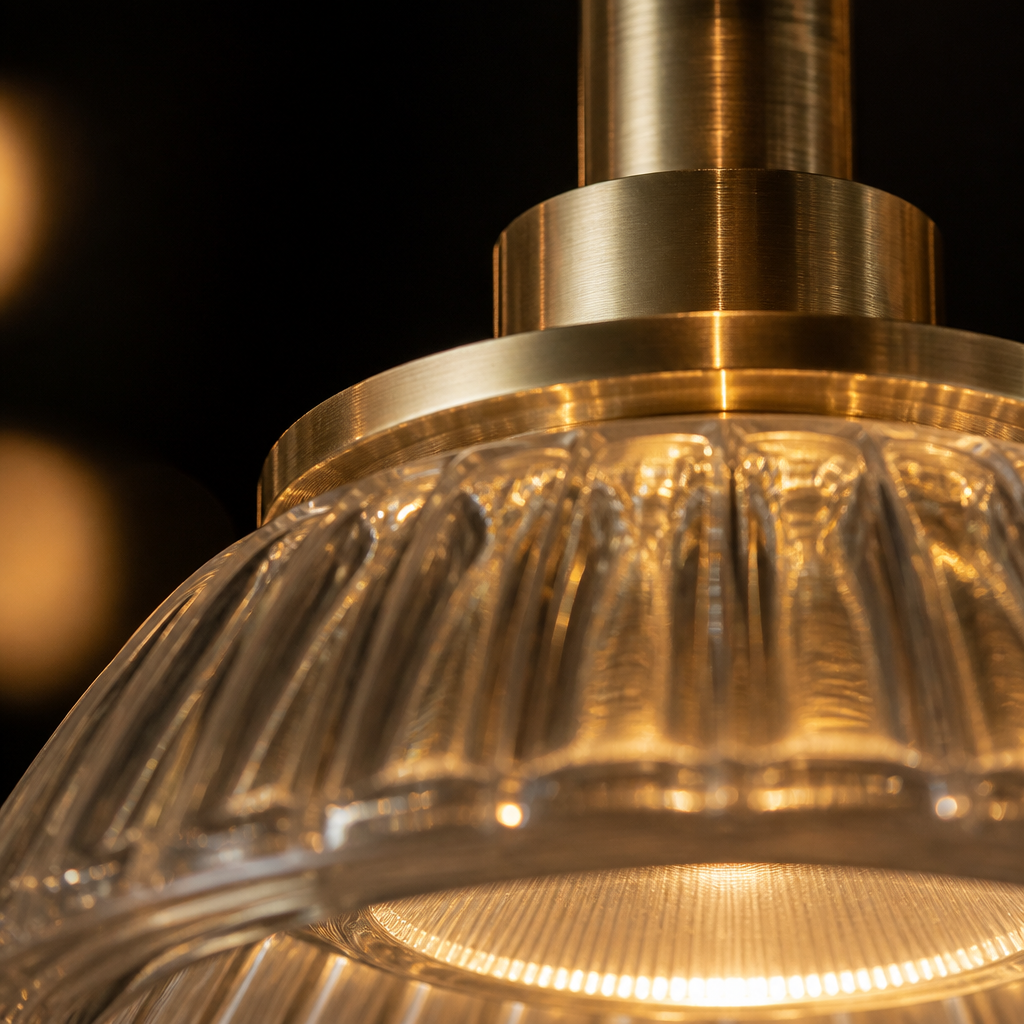
At Artilumen, we see a growing demand for pendant lighting that is both sculptural and functional. In 2026, hospitality designers are moving away from overly decorative fixtures and toward cleaner, architectural forms that blend with the interior. Linear pendants, fluted glass, brushed metal finishes, and textile-like diffusers are common in restaurant projects.
Another trend is the integration of intelligent dimming and scene control. A restaurant space may serve lunch, dinner, and late-night cocktails in the same volume. Pendant lighting must be flexible enough to support different scenes. This means choosing a luminaire with compatible drivers, sensors, and control protocols from the start.
Customization is also important. Many hotel and restaurant brands want a unique lighting identity. At Artilumen, we are able to adapt housing materials, finish colors, optical inserts, and cable lengths for project-specific designs. If you need customization, talk to our engineering team early in the design phase. That gives us time to develop a solution that meets your aesthetic and performance goals without delaying the project schedule.
Certification and Compliance: What to Request from Your Lighting Partner
B2B buyers should never accept a lighting fixture without reviewing its certification status and testing documentation. Depending on the project location, a product may need to meet different regulatory requirements. Certification ensures that the luminaire is safe, electrically compliant, and suitable for the installation environment.
At Artilumen, we take compliance seriously, but because certifications vary by country and market, we do not publish blanket claims. Instead, we recommend that every specifier request the following from their lighting supplier:
- Product datasheets and photometric files in IES or EULUMDAT formats
- Color rendering and color consistency documentation
- Dimming compatibility information for major control systems
- Safety and performance certifications applicable to your market
- Installation and maintenance instructions
- Warranty terms and spare parts availability
If you are evaluating Artilumen for a restaurant or hotel project, send us your specification and target market. We will confirm which certifications and test reports apply to your project. Contact us for details.
“The best restaurant lighting is not noticed as lighting. It is felt as mood, seen as confidence in the food, and remembered as the reason guests want to stay a little longer.” — Liz Lin, Lead Lighting Strategist at Artilumen
Conclusion
Selecting restaurant pendant lighting requires more than a beautiful fixture. For architects and hotel designers, the critical decisions are color temperature, beam angle, optical control, dimming quality, and long-term consistency. A thoughtful specification can elevate a guest’s experience, support the culinary concept, and reduce maintenance issues over the life of the project.
Start with 2700K for fine dining or 3000K for more casual environments. Choose a beam angle that matches your ceiling height and table layout. Verify color rendering and dimming stability. And always work with a lighting manufacturer that can provide certified performance data, consistent production quality, and clear communication on lead times.
At Artilumen, we partner with architects, interior designers, and hotel operators to deliver restaurant pendant lighting that balances design intent with engineering precision. Whether you are developing a single restaurant or a global brand standard, our team is ready to support you with photometric analysis, custom finishes, and project-specific documentation.
Contact us for details about your next hospitality project. We will help you define the right lighting solution — no guesswork required.